Guides · 5 September 2026
Why Roofline Light Work Goes Wrong in a Spokane Winter
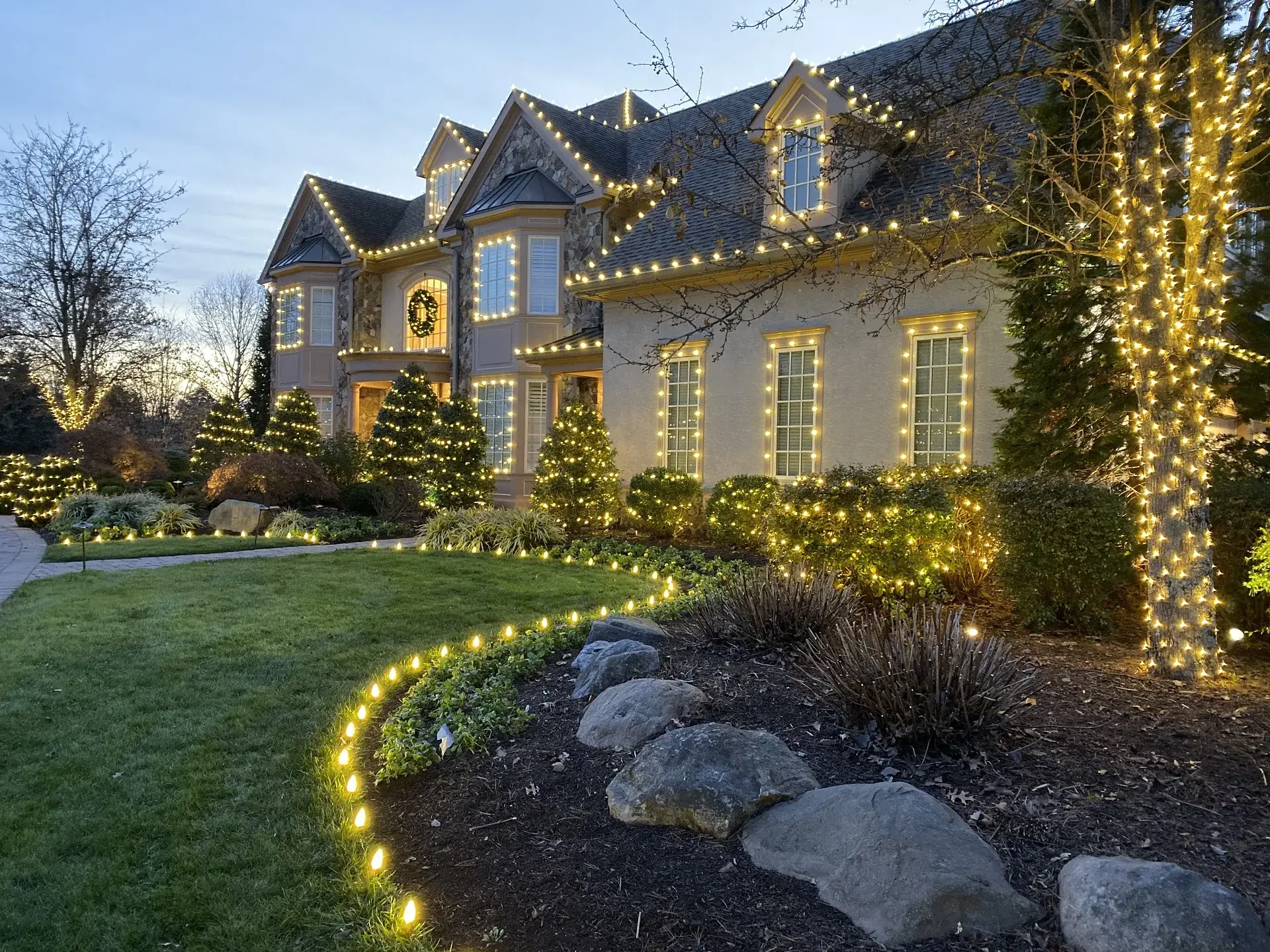
Most of the risk in this job is not the height. It is the surface you are standing on, the thing you are fastening to, and the circuit you are feeding.
The ladder, not the roof
Ladder footing is the hazard people underestimate. A ladder set on frozen lawn, frosted concrete or a slick deck board can slide at the base under load even when it felt solid on the way up. Spokane mornings deliver exactly those conditions from November onwards.
The other half is repositioning. The temptation on a long run is to overreach rather than climb down and move the ladder two feet. Most falls in this work happen during a reach, not a climb.
What cold does to the job
Cold makes everything slower and more brittle. Hands lose dexterity, which matters when you are seating small clips along a gutter lip. Plastic clips themselves become more fragile near freezing and snap under pressure that would be fine in October.
Daylight is the quiet constraint. By December in the Inland Northwest you have a short usable afternoon, and finishing a roofline in failing light is how shortcuts get taken.
Staples and nails are the expensive mistake
This is the one that outlasts the season. Staples and nails driven into fascia, shingles or trim create holes that let water in, and in a freeze-thaw climate water in a small hole becomes a larger hole.
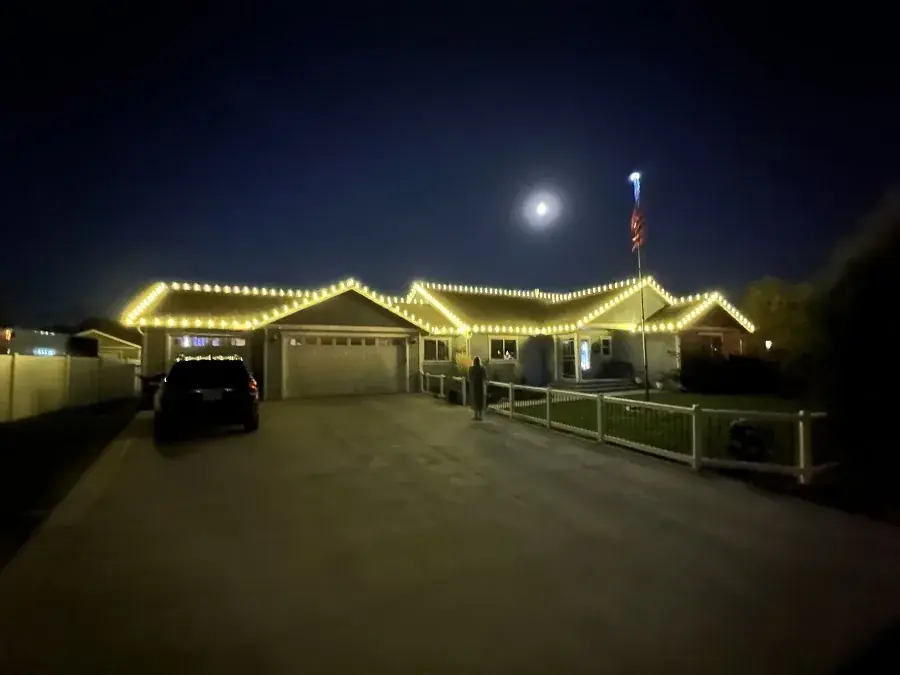
Proper installation uses clips designed to sit on the gutter lip or under the shingle edge, holding by shape rather than penetration. Nothing is drilled, nothing is driven, and the whole run lifts off clean in January. If someone is reaching for a staple gun, that is the moment to stop.
Circuits, not just cords
A display that works on the first evening can still be badly loaded. Exterior outlets often share a circuit with a garage or a basement, and the failure shows up later, usually when something else is switched on.
Work out the draw before the layout is finalised, keep runs on separate circuits where you can, and avoid chaining cords to reach a far corner. LED has made this far more forgiving than it used to be, but forgiving is not the same as unlimited.
The case for handing it off
A professional crew is insured for the work, which is the part homeowners think about least and should think about most. If something goes wrong on your property during a DIY install, it is your problem in every sense.
Custom Christmas Lights is licensed, bonded and insured, and installations come with a service line during the season — so a bulb that fails in January is a phone call rather than another trip up a frozen ladder.
If you do it yourself anyway
Work in daylight, on a dry day, before the first hard freeze. Use clips, never fasteners. Have someone foot the ladder. Move it rather than reach. And plan the power before you plan the layout — it is the part you cannot see from the road, and the part most likely to spoil the season.
Want a figure for your own property? Design and quoting are free, with no obligation.