
Guides · 19 August 2026
Lighting an Acreage Property: Trees, Drives and Power
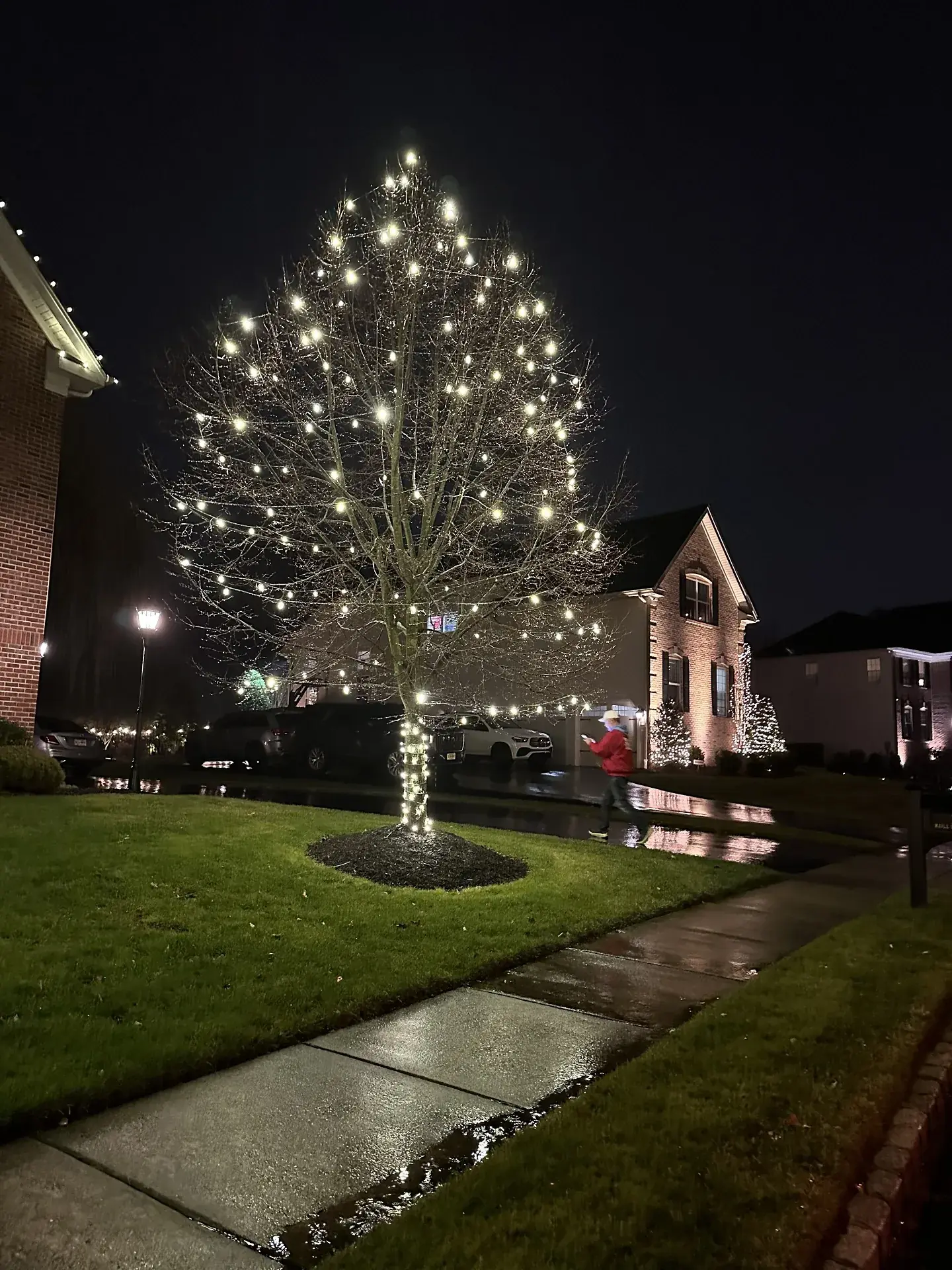
On a larger lot the roofline is the easy part. The difficulty is everything between the house and the road — and the power to run it.
The roofline is a small share of the work
On a quarter-acre lot in town, the roof is the display. On an acreage property around Otis Orchards, Newman Lake or Dalton Gardens, a lit roofline can look lost — the house sits too far back for the detail to read from the road.
What carries a large property is the approach: trees along the drive, a lit entry, a fence line, something that gives the eye a path from the road to the house. The roofline then finishes it rather than carrying it alone.
Trees take more than people budget for
Wrapping is the single most underestimated item on a large property. A rough planning figure is about 100 lights per foot and a half of tree, and a mature outdoor tree can take anywhere from 10 to 100 strands depending on size and how far up you go.
You also get less visual return per dollar from wrapping than from lining, because the light is spread across a trunk and branches rather than drawn along a clean edge. That does not make it wrong — it makes it worth deciding deliberately rather than discovering halfway through.
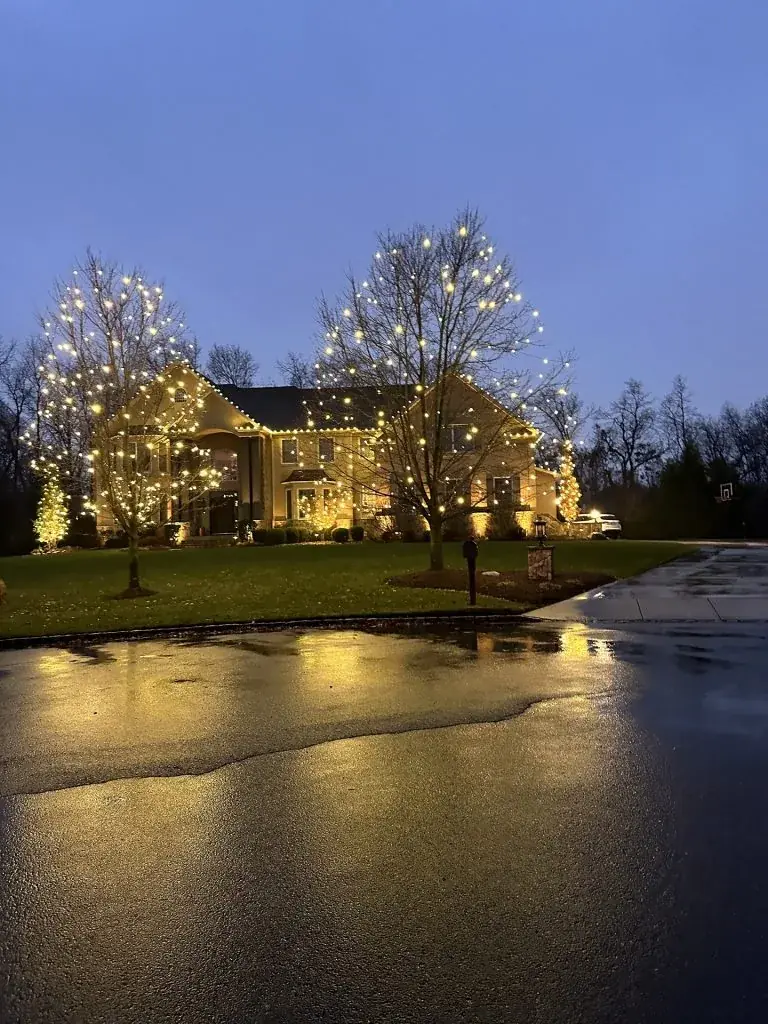
Power is the real constraint
This is where home displays on big lots run into trouble. Exterior outlets are usually few and often share a circuit with something else. Reaching a tree 150 feet from the house means extension cords, and daisy-chaining cords is how a display ends up leaning on one overloaded circuit.
Plan the power before the layout. Work out what each run will draw, which outlet feeds it and whether that circuit has headroom. Modern LED helps a great deal here, since it draws a fraction of what incandescent did, but headroom is finite and a tripped breaker in late December is a miserable thing to diagnose in the dark.
Hide the infrastructure
On a long frontage the cords and lead wires are as visible as the lights. Runs should follow fence lines, bed edges and the base of the drive rather than cutting across open lawn. Lead wires belong tucked out of sight, not stretched toward the nearest outlet.
A display reads as professional largely because you cannot see how it is fed.
Timers, and why one is not enough
A single timer at the house will not cover a property with several independent runs. Each zone with its own power source needs its own schedule, and they should match so the whole property comes on together.
Set it once and you never think about it again — which on a property with a long walk to the far outlet is worth more than it sounds.
If the budget will not stretch to everything
Prioritise the approach over the perimeter. A lit drive and entry with a simple roofline reads better from the road than a fully lit roof behind an unlit hundred-yard frontage. You can add zones in later seasons once the layout and the power plan already exist.
Want a figure for your own property? Design and quoting are free, with no obligation.