Guides · 30 July 2026
C9, C7 or Mini Lights: Which Bulb Suits Your Home
Three bulb types cover almost every residential display. They are not interchangeable, and picking the wrong one is the most common reason a finished display looks thinner than the homeowner pictured.
The three you will be offered
C9 is the large strawberry-shaped bulb most people picture on a roofline. C7 is the same shape a size down. Mini lights are the small push-in bulbs sold on long strands, the ones most of us have untangled in a garage.
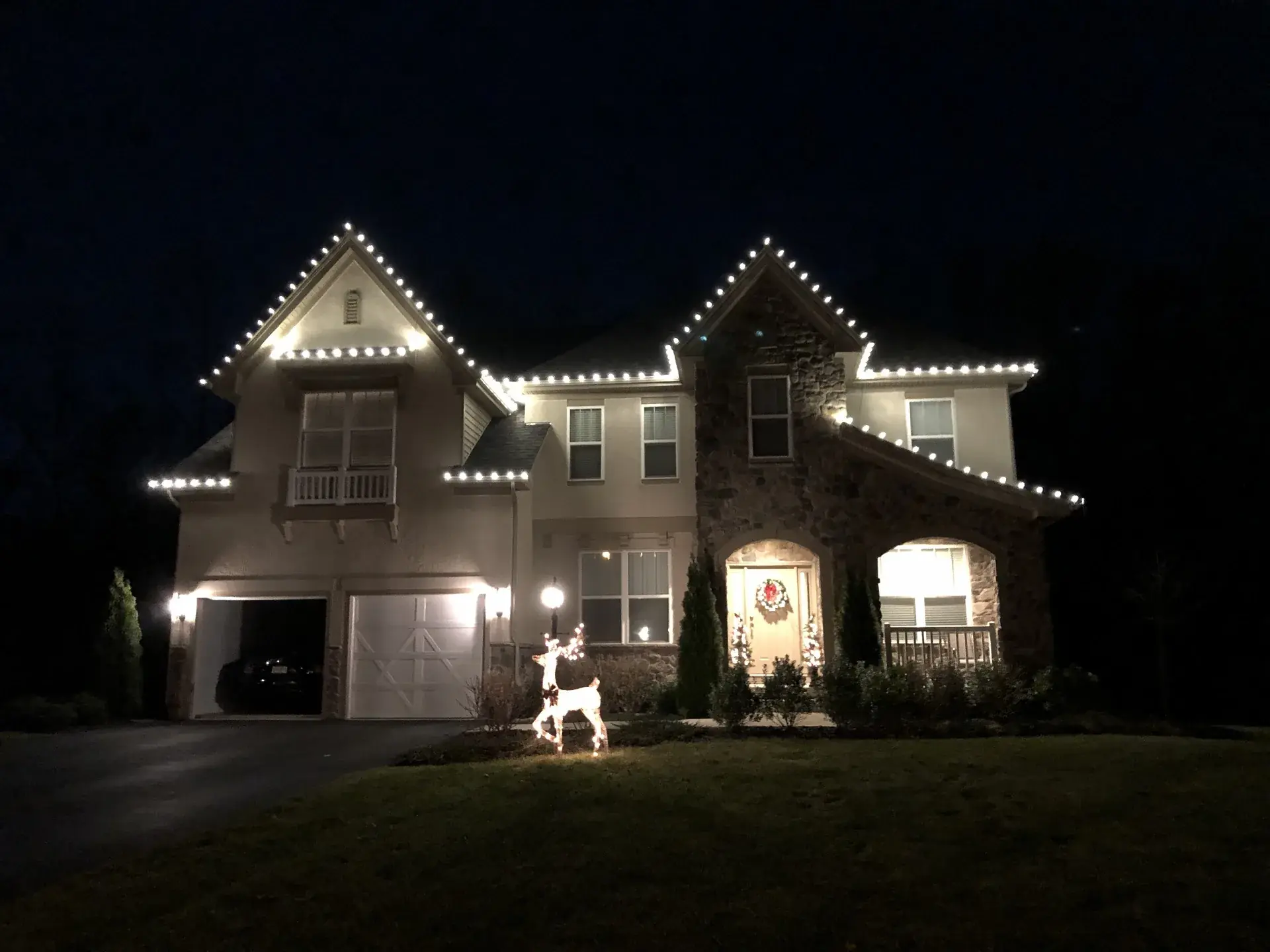
The difference that matters is not brightness but scale. A C9 reads clearly from the road at dusk. A mini light does not, which is why a roofline done in minis can look faint from the street even though it took longer to install.
Why professionals default to C9 on rooflines
Commercial-grade C9 is the standard for roofline work for three practical reasons. The bulbs are spaced on heavier wire that holds a line without sagging between clips. They sit proud of the gutter so the roof edge reads as a clean line rather than a blur. And individual bulbs can be replaced without pulling a whole strand down.
That last point matters more than it sounds. When a bulb fails in January on a commercial C9 run, a crew swaps the bulb. On a cheap sealed strand, the fix is replacing the run.
Custom Christmas Lights uses commercial-grade C9 across its installations for exactly these reasons.
Where mini lights still win
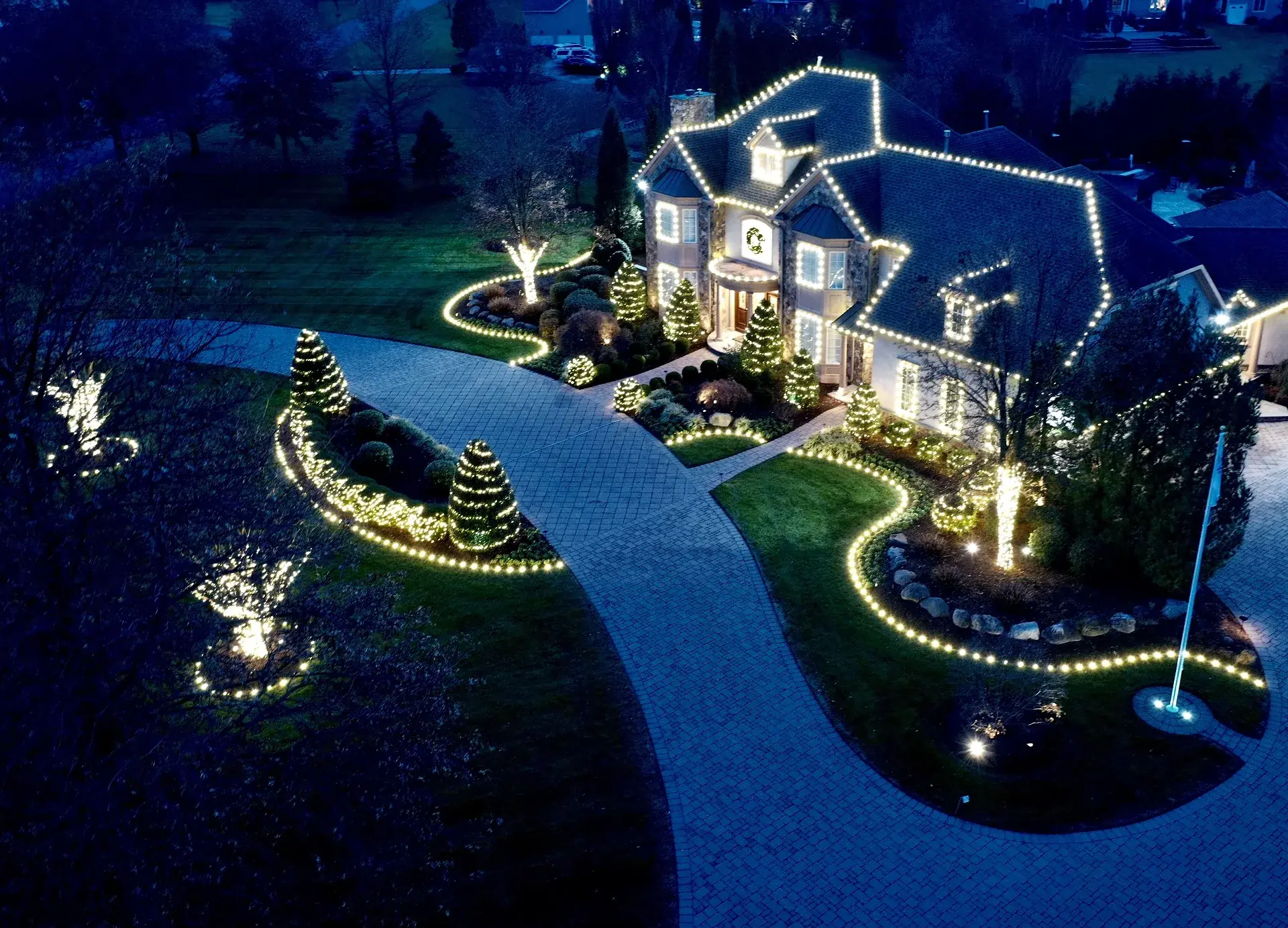
Minis are the right answer for anything you wrap rather than line: trees, shrubs, columns, railings and garland. Their small size and flexible strand let them follow a trunk or branch closely, which a C9 simply cannot do.
Be realistic about quantity. A useful rule of thumb is around 100 lights per foot and a half of tree, and an outdoor tree can take anywhere from 10 to 100 strands depending on size and how thoroughly you wrap it. Wrapping is where homeowners most often underestimate both the material and the hours.
LED or incandescent
This question is mostly settled. Older incandescent bulbs drew enough power to show up on a December electric bill, and they ran hot. Modern LED draws a fraction of that — enough that most households will not notice a change in their monthly bill — and runs cool, which matters when a bulb is sitting against a shingle or inside a wreath.
The practical upshot is that you can light more of the property on the same circuit with LED than you could a decade ago, without the heat.
Commercial grade versus the big-box shelf
Retail seasonal stock is built to a price and a single season. The wire is thinner, the sockets are less weather-tolerant, and the strands are often sealed so a single failure takes out a run.
Commercial product bought direct from distributors costs more up front and survives a Northwest winter of wind, snow load and freeze-thaw. If you are hiring the work out, the grade of material is a fair question to ask before you compare two quotes.
A simple way to decide
Line with C9, wrap with minis. Use C7 where you want the roofline look at a smaller scale, such as a porch edge or a detached garage that should not compete with the main house. Most good displays use at least two of the three.
Want a figure for your own property? Design and quoting are free, with no obligation.